

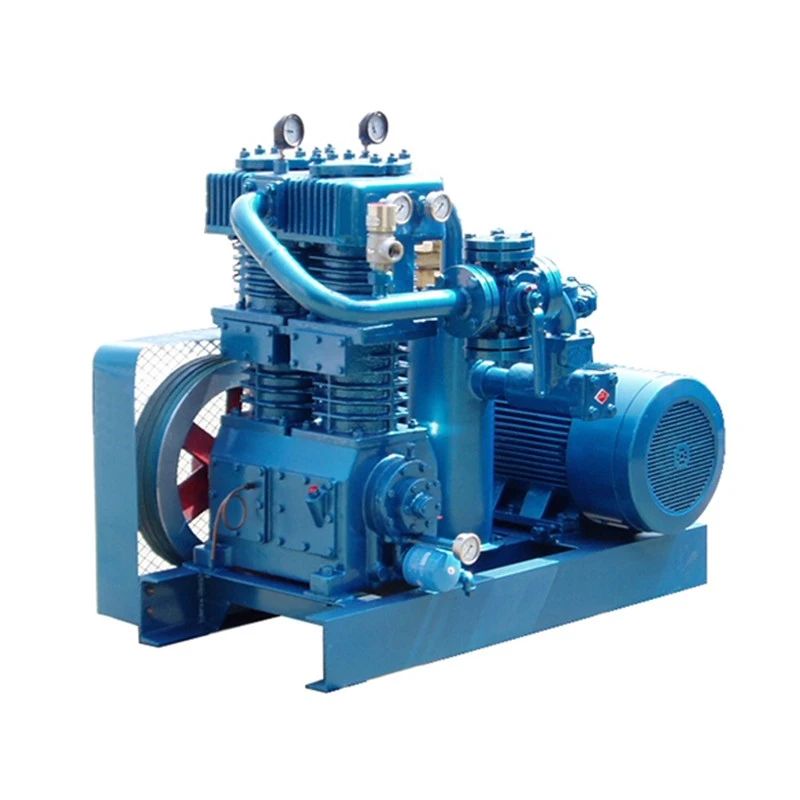
Propylene Compressor
Sollant offers high-performance propylene compressors for reliable chemical production, ensuring maximum efficiency and safety for your plant.
The propylene compressor is specifically designed for the unloading, loading, tank-to-tank transfer, residual gas recovery, and residual liquid recovery of media such as propylene, LPG, C4 fractions, and liquid ammonia; it serves as critical equipment in the gas, chemical, and energy industries.
Addressing the pain points associated with traditional intermittent processes-such as the lack of recovery systems and the low efficiency and high energy consumption of vacuum pumps-this unit offers multi-functional versatility alongside advantages such as a compact structure, smooth operation, high reliability, and a long service life.
Key Advantages
This product moves away from outdated traditional technologies, incorporating multiple optimizations in design and manufacturing:
Compact structure and high integration
The unit features a small footprint, allowing for flexible layout within existing facilities and simplifying installation and maintenance.
Oil-free lubrication design ensuring medium purity
It utilizes an oil-free reciprocating piston structure to prevent lubricating oil from contaminating the propylene medium, thereby guaranteeing the purity of the recovered propylene and meeting the rigorous requirements of downstream processes.
Smooth operation and high reliability
A low-speed design combined with the use of high-strength components significantly reduces wear on moving parts, effectively extending the unit's service life and ensuring stable operation during long-term, continuous service.
Industry Applications
Thanks to its excellent media compatibility and operational reliability, this product has become core auxiliary equipment in the following industries:
Petrochemical Industry: Suitable for propylene recovery and boosting in polypropylene production units, vacuum extraction in degassing units, and auxiliary systems for ethylene plants. It replaces high-energy-consumption vacuum pumps, improves raw material utilization, and reduces specific energy consumption per ton of polypropylene.
Gas Storage, Distribution, and Municipal Gas Industry: Used for tanker unloading at LPG storage and distribution stations, tank pressurization prior to cylinder filling, and gas-phase boosting and transport during peak-shaving operations, ensuring a continuous and stable gas supply.
Coal Chemical and Deep Processing Industry: Employed in processes such as Methanol-to-Olefins (MTO) and Propane Dehydrogenation (PDH) for gas compression and recovery during the intermediate storage and transport of propylene; capable of handling complex feedstock compositions and significant operational fluctuations.
Fine Chemical and Pharmaceutical Industries: Suitable for the transfer and recovery of materials such as liquid ammonia and dimethyl ether (DME); meets flexible pressurization needs for small-batch, multi-batch production, and is particularly well-suited for fine reaction processes requiring high media purity.
New Energy and New Materials Sectors: Serves as auxiliary gas compression equipment in emerging production lines-such as those for carbonate electrolyte solvents and high-end polypropylene membrane materials-facilitating green, low-carbon production.
FAQs
Q1: What types of propylene compressors are commonly used?
Depending on process flow rates, pressure ratios, and plant scale, common types of propylene compressors include:
- Centrifugal compressors: Suitable for large-scale industrial production units requiring high flow rates, continuous operation, and stable pressure ratios (e.g., main circulation or feed gas compression in large polypropylene plants). They are characterized by smooth operation, high efficiency, and long maintenance intervals.
- Reciprocating compressors (piston type): Suitable for low-to-medium flow rates and high-pressure applications. They are often used for feed gas boosting, trace gas recovery, or high-pressure injection systems.
Q2: What are the common operational faults of propylene compressors, and how can they be prevented?
Common faults:
- Excessive vibration: May be caused by rotor imbalance, misalignment, bearing wear, or operation near the surge zone.
- Excessive bearing or discharge temperatures: Usually associated with insufficient lubricating oil cooling, internal leakage, or an excessively high pressure ratio.
- Seal leakage: Abnormal buffer/barrier gas pressure or seal ring wear can lead to propylene leakage.
- Centrifugal compressor "surge": Violent airflow oscillation triggered when the intake flow rate drops below the design limit.
- Preventive measures: Strictly implement routine inspections and vibration monitoring; maintain stable lubrication and cooling systems; monitor process parameters to avoid operating the unit under overload or low-flow conditions.
Q3: What are the key aspects of daily maintenance and servicing for propylene compressors?
- Lubrication and sealing system checks: Regularly monitor lubricating oil quality, pressure, and temperature, as well as the pressure and flow rates of buffer/barrier gas for dry gas seals.
- Parameter monitoring: Continuously track trends in bearing vibration, axial displacement, and inlet/outlet pressures and temperatures across various stages.
- Regular rotor turning and cleaning: Perform rotor turning according to specifications during shutdowns to prevent rotor deformation; regularly clean and verify filters and coolers.
Q4: How is Prognostics and Health Management (PHM) implemented for propylene compressors?
Modern large-scale propylene compressors are typically equipped with advanced online condition monitoring systems to enable predictive maintenance:
- Key monitoring parameters: Real-time acquisition of multi-dimensional data, including rotor vibration (shaft and bearing housing vibration), axial displacement, bearing temperature, discharge pressure, and motor current.
- Fault diagnosis methods: Utilizing spectrum analysis (FFT) to detect mechanical unbalance, misalignment, or gearbox meshing anomalies; identifying oil film whirl or instability through waveform and shaft orbit analysis; and assessing internal leakage or coking trends via process parameter deviation analysis, thereby allowing for maintenance scheduling before faults escalate.
Hot Tags: propylene gas compressor, China propylene gas compressor manufacturers, suppliers, factory, air compressor for oxygen concentrator, Ammonia Refrigeration Compressor, Hydrogen Gas Compressor, Nitrogen Booster Compressor, oxygen compressor machine, Propylene Gas Compressor


