

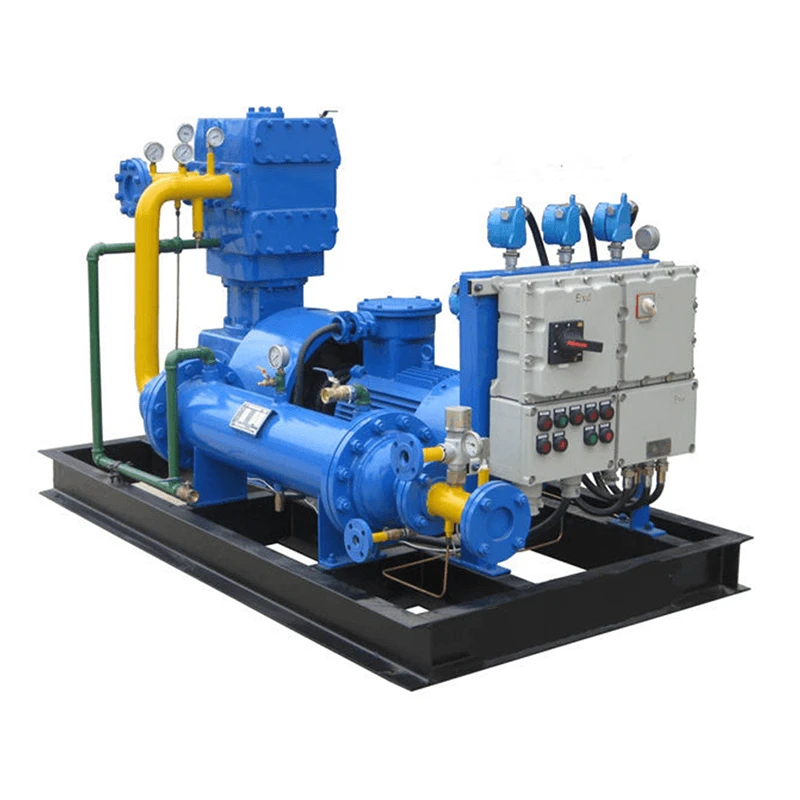
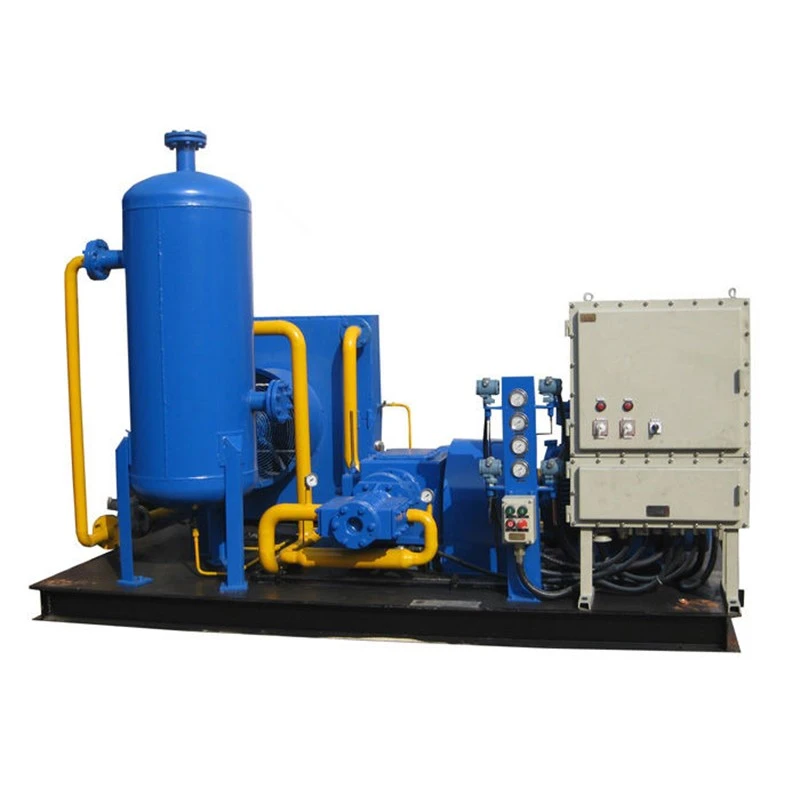
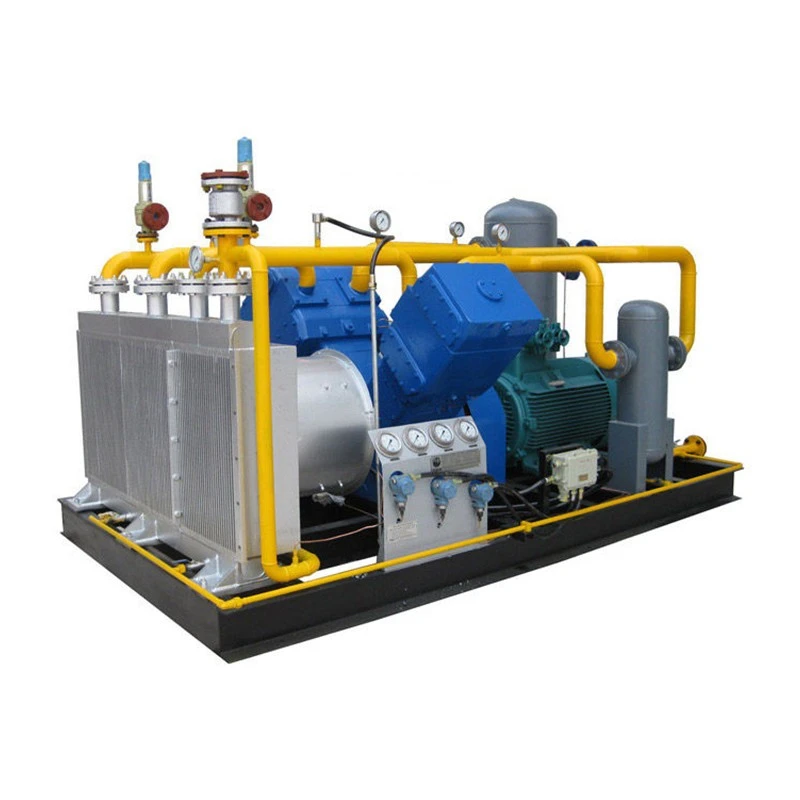
Natural Gas Compressor
Sollant offers high-performance natural gas compressors designed specifically for pipeline boosting and oil and gas processing.
- High-quality materials ensuring stable and reliable operation
- Low maintenance costs and low noise levels
- Easy on-site installation and integration with the user's piping system
- Automatic shutdown and alarm functions to protect the equipment
- Cooling options include water cooling and air cooling
Product Features
Product Overview
Natural gas compressors serve as the core power equipment for boosting natural gas pressure. By converting mechanical energy into gas potential energy, they significantly increase gas density and transport efficiency, making them indispensable components across the entire natural gas value chain-including extraction, long-distance pipeline transport, storage, processing, and end-user supply.
This series of compressor units is specifically designed for applications such as pipeline natural gas boosting and oil and gas processing plants. Capable of performing pressure-boosting tasks with stability and high efficiency, these units facilitate the effective utilization of clean energy and support sustainable development. Amidst the growing demand for clean energy, this product delivers long-term value to users through reliable performance and cost-effective operation.
Technical parameters of the natural compressor

Application Scenarios
This series of compressor units is primarily suitable for:
- Pipeline natural gas boosting and transmission
- Gas boosting and processing at oil and gas treatment plants
- Wellhead boosting at natural gas extraction sites
- LNG production and related process stages
- Stable gas supply to industrial users
They provide reliable pressure support across long-distance pipelines, processing stations, and end-user supply applications.
Technical Highlights and Design Philosophy
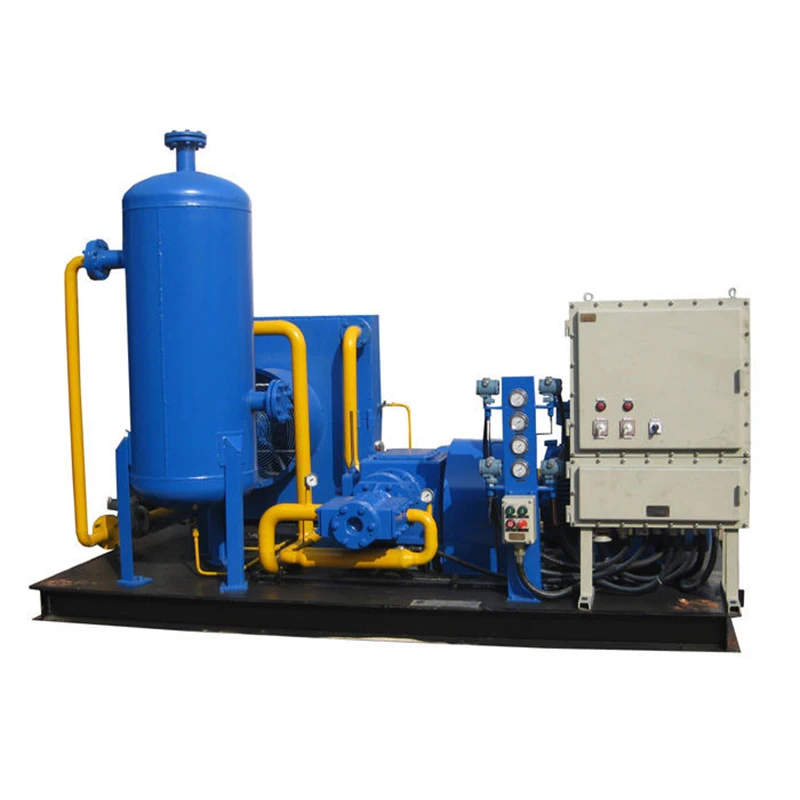
The compressor converts mechanical power into gas compression work via a high-efficiency drive system, increasing both pressure and density to significantly enhance transportation and storage efficiency. The unit features targeted optimizations in material selection, structural design, cooling systems, and protection logic, balancing operational economy, ease of use, and safety.
It supports dual cooling modes-water-cooled and air-cooled-allowing for flexible configuration based on on-site water availability, ambient temperature, and spatial constraints, thereby further enhancing adaptability.

Natural Gas Compressor FAQ
Q1: How does a natural gas compressor work?
Driven by an electric motor or an engine, the compressor transfers mechanical energy to its compression components to compress the natural gas, thereby reducing its volume and increasing its pressure. The resulting increase in density facilitates long-distance pipeline transport, storage, and subsequent processing or utilization.
Q2: What are the common malfunctions encountered during natural gas compressor operation?
Compressor malfunctions stem from various factors, primarily involving the following areas:
- Mechanical failures: These are the most common type, including bearing damage, seal failure, rotor or blade damage, and issues with shafts and couplings. These often manifest as abnormally high vibration, increased noise, or a sharp drop in efficiency.
- Lubrication system failures: Issues such as lubricant degradation, oil line blockages or leaks, and oil pump malfunctions can lead to accelerated equipment wear or even shaft seizure.
- Cooling system failures: Insufficient cooling water flow or reduced cooler efficiency can cause the equipment to overheat, compromising performance and safety.
- Vibration issues: Vibration is a persistent problem for compressors with complex root causes. It may stem from fluid dynamics (gas flow pulsation, surge), mechanical factors (rotor imbalance, poor foundation), or piping vibration. In one instance, a compressor operated with unresolved vibration issues for seven years.
Q3: Why is the sealing system so critical for natural gas compressors?
Natural gas is a flammable and explosive hazardous medium; any leakage can easily trigger a fire or even an explosion.
The compressor's shaft seal is a crucial component that prevents natural gas from leaking along the rotating shaft. For the dry gas seal systems commonly used in centrifugal compressors, it is essential to maintain proper seal gas pressure and flow rates and to use high-quality filters to prevent external impurities from entering the sealing assembly.
A painful lesson illustrates this: to address a vibration issue, a plant installed a substandard metal hose on the discharge pipeline. Twenty days later, the hose ruptured due to vibration fatigue, causing an instantaneous release of natural gas at 50 bar pressure. This triggered an explosion that shattered the factory's windows and blew off the roof.
Hot Tags: natural gas compressor, China natural gas compressor manufacturers, suppliers, factory, CNG Daughter Station Compressor, CNG Mother Station Compressor, mother station CNG compressor, natural gas compressor packages, natural gas compressor series, natural gas reciprocating compressor


